

Introduction: Why Complications Knowledge Is Non-Negotiable in UK Aesthetics
Every aesthetic practitioner—whether newly trained or highly experienced—will face complications at some point in their career. This is not a reflection of poor practice; it is the reality of working with injectables.
As more professionals enter the industry through Botox training, filler training courses, skin booster training, and short-form qualifications, there is a growing gap between technical training and real-world complication management.
Searches such as aesthetic complications UK, filler gone wrong, Botox complications, and refresher course for fillercontinue to rise—because injectors are realising that confidence doesn’t come from certificates alone. It comes from preparation, support, and knowing exactly what to do when something doesn’t go to plan.
This guide explains how complications occur, how to recognise them early, and how to protect both your patients and your professional reputation.
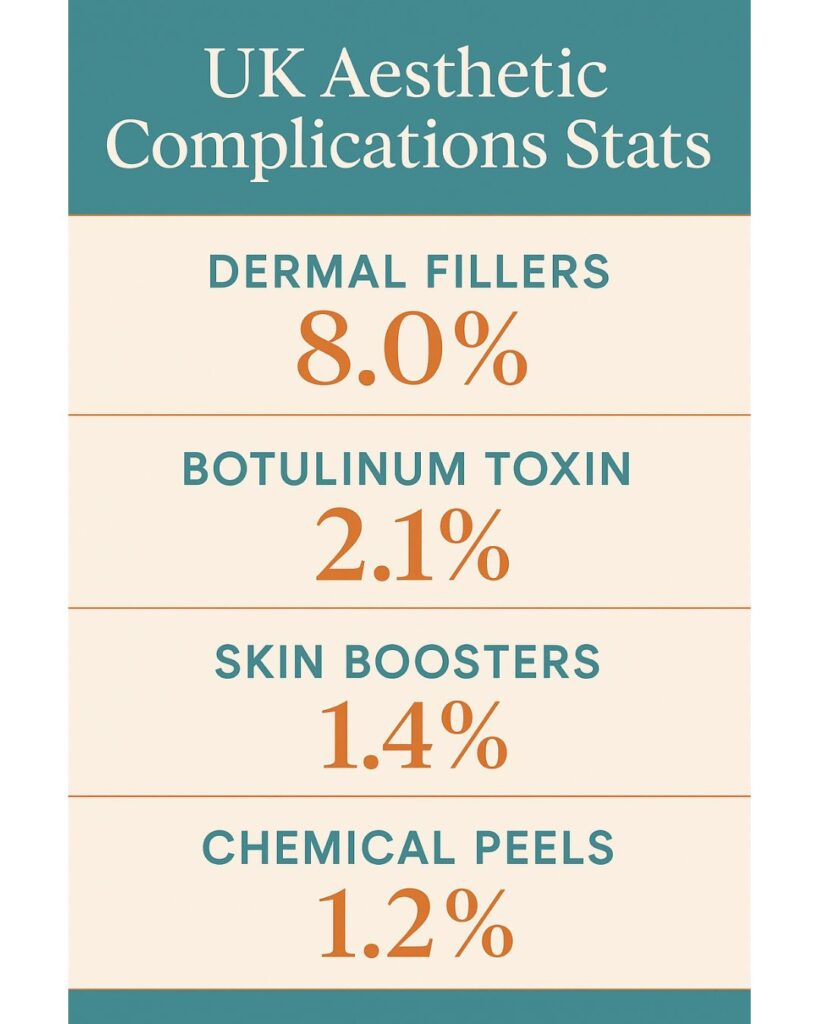
Reported aesthetic complication trends in the UK show dermal fillers carry the highest risk profile, followed by botulinum toxin, skin boosters, and chemical peels. This highlights why structured training, early recognition, and access to expert support are critical at every level of practice.
Why Complications Are Increasing in the UK Aesthetic Industry
The UK aesthetics industry has expanded rapidly, but that growth has also introduced risk.
Key contributing factors include:
- Entry-level training without adequate follow-up
- Practitioners working in isolation
- Limited access to experienced clinical support
- Inconsistent prescriber relationships
- Pressure to attract and retain clients quickly
Many practitioners complete Botox or filler training and then immediately search for how to get Botox clients or how to get filler clients. When business pressure rises faster than clinical confidence, mistakes are more likely to happen.
Recognising Aesthetic Complications Early
Early recognition is one of the most important skills an injector can develop. Delayed action is often what turns a manageable issue into a serious complication.
Common early warning signs include:
- Disproportionate pain during or after injection
- Blanching, mottling, or colour changes to the skin
- Delayed capillary refill
- Visual disturbance
- Increasing swelling, heat, or redness beyond expected post-treatment responses
These signs are not always taught in depth during basic filler training courses, which is why refresher courses, clinic shadowing, and ongoing mentorship are becoming essential.
Immediate Steps to Take When a Complication Occurs
When a complication arises, your response matters more than perfection.
Key principles include:
- Stop the treatment immediately
- Stay calm and reassure the patient
- Follow established emergency protocols
- Document everything clearly and objectively
- Escalate early rather than late
Practitioners often delay escalation out of fear—fear of appearing inexperienced, fear of damaging their reputation, or fear of involving a prescriber. In reality, early escalation protects both you and the patient.
Having access to expert guidance at the point of need is one of the biggest confidence gaps reported by practitioners after completing Botox or filler training.
Prevention: The Most Underrated Skill in Aesthetics
Complication prevention begins long before the needle touches the skin.
Strong prevention includes:
- Thorough consultation and consent
- Conservative treatment planning
- Understanding anatomical danger zones
- Recognising when not to treat
- Managing patient expectations
Practitioners who invest in clinic shadowing for aesthetics often report a significant improvement in their consultation skills, not just their injection technique. Watching experienced clinicians decline treatment, redirect patients, or modify plans is invaluable.
The Role of Prescribers in Complication Management
Searches for find a prescriber UK are common, particularly among non-prescribing practitioners. However, complications highlight the importance of quality, not just availability, when it comes to prescriber relationships.
A safe prescriber relationship should include:
- Clear escalation protocols
- Timely access during complications
- Shared responsibility for patient safety
- Alignment on clinical standards
Prescribers should be part of your safety framework—not a last-minute contact when something goes wrong.
How Complications Impact Your Business (and Your Confidence)
Beyond the clinical risks, complications can deeply affect:
- Practitioner confidence
- Patient trust
- Online reputation
- Willingness to market or attract new clients
Many injectors who experience a complication report hesitating to post on social media, avoiding consultations, or questioning whether aesthetics is right for them at all.
This is why complications education should not be framed as “worst-case thinking,” but as professional resilience training.
Why Refresher Training and Mentorship Matter More Than Ever
Completing a refresher course for filler or advanced Botox training is no longer about learning new techniques alone. It is about:
- Reinforcing safety fundamentals
- Reviewing complication management pathways
- Gaining reassurance through expert discussion
- Normalising questions and uncertainty
The most confident practitioners are not those who never face complications—but those who know they are supported when they do.
Frequently Asked Questions
Are complications common in aesthetic practice?
Yes. Even with excellent technique, complications can occur. Preparation and response are what matter most.
Should I do a refresher course for filler treatments?
Yes. Refresher training helps reinforce anatomy, safety, and decision-making—especially if you’ve been practising independently.
Does clinic shadowing help with complications management?
Absolutely. Observing experienced clinicians manage real scenarios builds confidence that theory alone cannot provide.
What should I do if I don’t feel confident managing a complication?
Escalate early and seek expert support. Delaying action increases risk.
Can complications affect my ability to get clients?
Handled poorly, yes. Managed professionally, complications can actually strengthen trust and credibility.
Is complications training only for advanced injectors?
No. Complications education should begin alongside initial Botox and filler training.
Conclusion: Confidence Comes From Knowing You’re Not Alone
Aesthetic complications do not define your competence—but how you prepare for and respond to them defines your professionalism.
In an industry where many practitioners are trained quickly and then left unsupported, the future belongs to those who prioritise safety, mentorship, and ethical practice.
When you know you have guidance, clarity, and a plan, you practise with confidence—and patients feel that.